Honda has officially launched sales of its new fixed-battery electric two-wheeled personal commuter, the Honda UC3, in Thailand and Vietnam. Market introduction in both countries begins this spring, marking another important step in Honda’s broader electrification strategy for motorcycles in Southeast Asia. Alongside the commercial launch of the UC3, Honda is also accelerating the development of charging infrastructure across major urban areas in both markets.
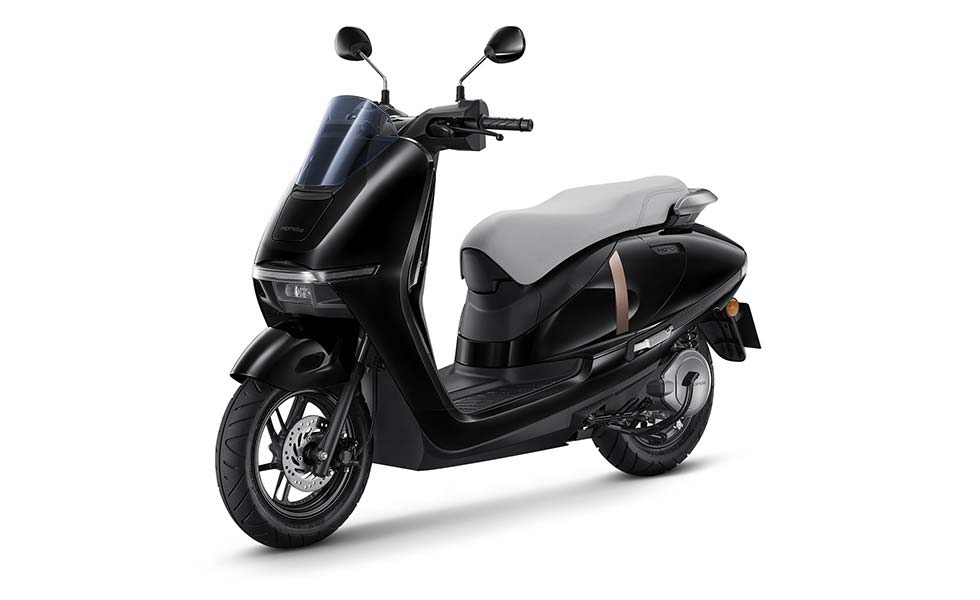
Positioned as an electric alternative equivalent to a 110cc internal combustion engine motorcycle, the Honda UC3 is the first electric two-wheeler to fully embody Honda’s new global brand direction for its electric motorcycle business, expressed through the message “Expected life. Unexpected discoveries.”
The UC3 was developed under the concept of an “Intelligent Urban Life Partner.” Honda aimed to create an electric commuter that delivers value unique to EVs while preserving the quality, reliability, and safety standards established through decades of internal combustion engine development. The result is a model designed to meet the practical demands of everyday urban mobility while introducing advanced electric technologies.
Powering the UC3 is Honda’s first fixed-type lithium iron phosphate battery. This LFP battery is paired with a wheel-side electric motor that has been developed and manufactured in-house by Honda. The motor produces a maximum output of 6.0 kW. Through optimized regenerative braking control and an improved magnetic circuit design, overall efficiency has been enhanced. As a result, the UC3 achieves a cruising range of up to 122 kilometers per charge under WMTC Mode 1 testing, based on Thailand certification standards.
To accommodate different riding styles and urban conditions, the UC3 features three selectable riding modes: STANDARD, SPORT, and ECON. A reverse mode is also included, allowing for easier maneuvering during parking or low-speed reversing, a particularly useful feature in dense city environments.
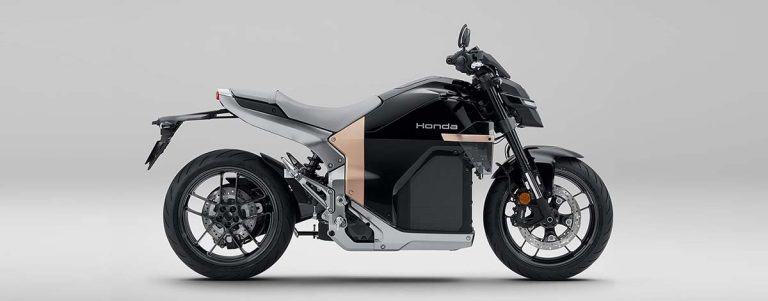
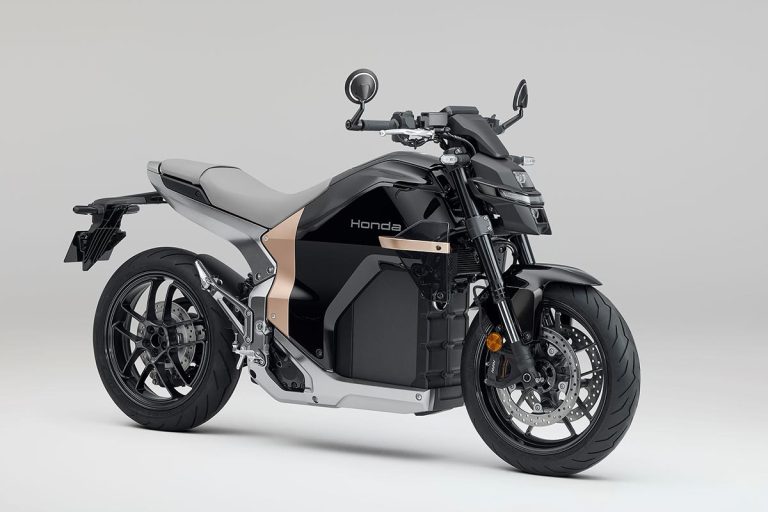
From a design standpoint, the UC3 adopts smooth, flowing body lines extending from the front to the rear, highlighted by a distinctive arched shape around the tail section. The model features a horizontal signature light, a design element first introduced on Honda’s initial electric motorcycle, the Honda WN7. The dedicated EV color scheme combines a predominantly black body with gold-accented components, reinforcing the premium positioning of the model. In addition, the UC3 carries a newly developed “Honda” font created exclusively for Honda’s electric motorcycle lineup.
Charging capability is supported by “CHAdeMO for two-wheelers,” a charging standard based on international specifications recommended by the CHAdeMO Association. Two charging options are available to suit different environments: a 1200W charger and a 450W charger. Using the 1200W charger, a full charge from 0 to 100 percent takes approximately four hours, while charging from 20 to 80 percent can be completed in around two hours. With the 450W charger, a full charge takes approximately nine hours, and a 20 to 80 percent charge requires about five hours.
As part of the UC3 rollout, Honda is expanding charging infrastructure for fixed-battery electric motorcycles in both Thailand and Vietnam. In Thailand, the company plans to increase the number of CHAdeMO charging stations for two-wheelers, primarily at Honda motorcycle dealerships and shopping malls in and around the Bangkok metropolitan area.
In Vietnam, Honda will begin installing charging stations at Honda motorcycle dealerships in major cities, including Hanoi, Ho Chi Minh City, and Da Nang. These stations are scheduled to become operational starting in June 2026.
At the same time, Honda will continue to improve the usage environment for electric motorcycles powered by the swappable Honda Mobile Power Pack e: battery. Expansion of Honda e:Swap BATTERY STATION installations will proceed at Honda motorcycle dealerships in Bangkok and Hanoi, supporting customers who use swappable battery systems.
Production of the Honda UC3 began in December 2025 at Thai Honda Co., Ltd., with units supplied to both Thailand and Vietnam. In Vietnam, Honda plans to transition to local production at Honda Vietnam Co., Ltd. during 2026, creating a supply system aligned with the rapid electrification of the country’s motorcycle market.
Honda has set a long-term goal of achieving carbon neutrality across all products and corporate activities by 2050. Within its motorcycle business, the company will continue advancing internal combustion engine technologies while positioning electrification as a central pillar of its environmental strategy. Honda plans to introduce electric motorcycles globally on a regular basis, offering a diverse lineup tailored to regional and customer-specific needs.
Looking ahead, Honda also plans to pursue battery repurposing and recycling initiatives to help establish a circular value chain. These efforts are intended to support the realization of a carbon-neutral society while continuing to deliver the freedom and enjoyment of mobility to a broader range of riders.